AC-SENSE: Daisy-Chain AC Presence Module
Sold by Tuksi.Net · in ESP Accessories
AC-SENSE - Isolated and Protected AC Mains Detector, Daisy-Chainable


What is AC-SENSE?
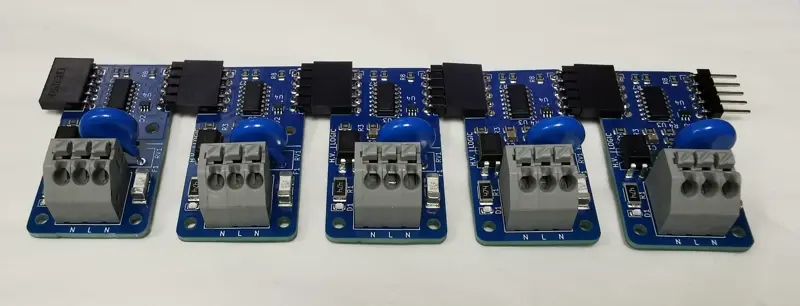
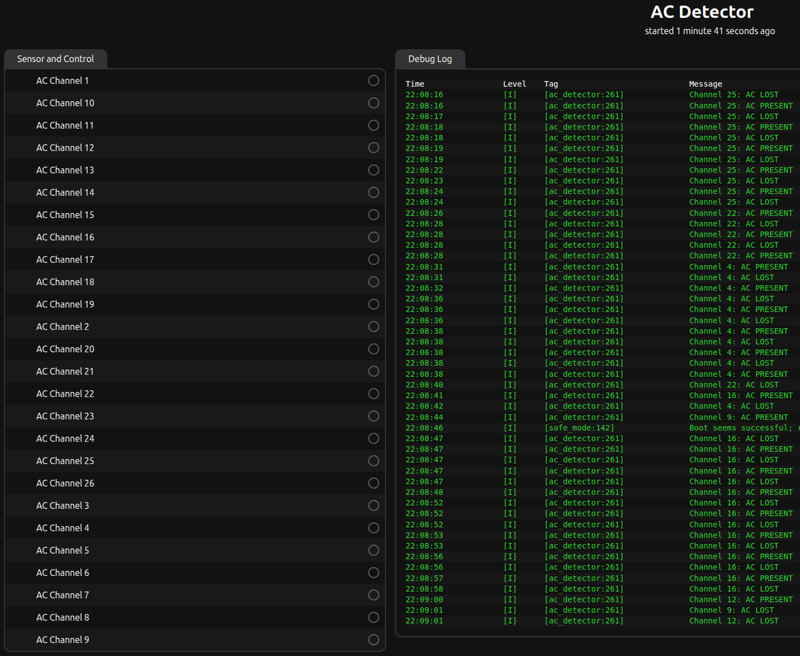
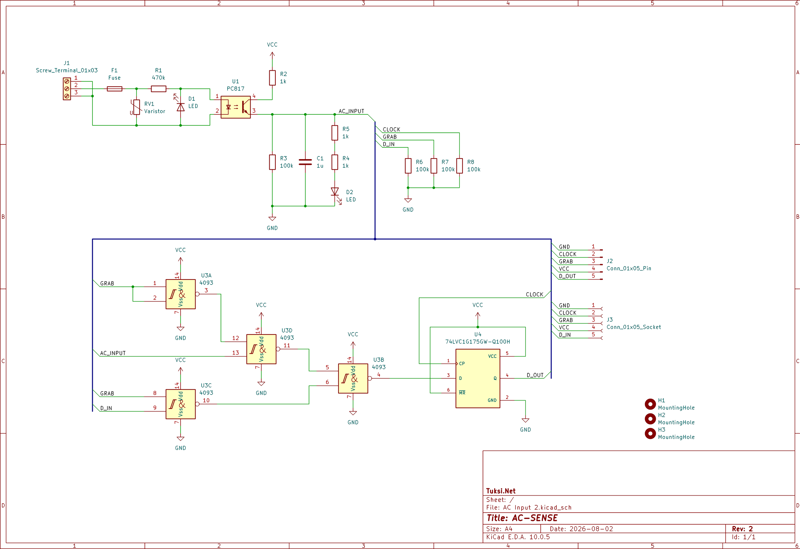
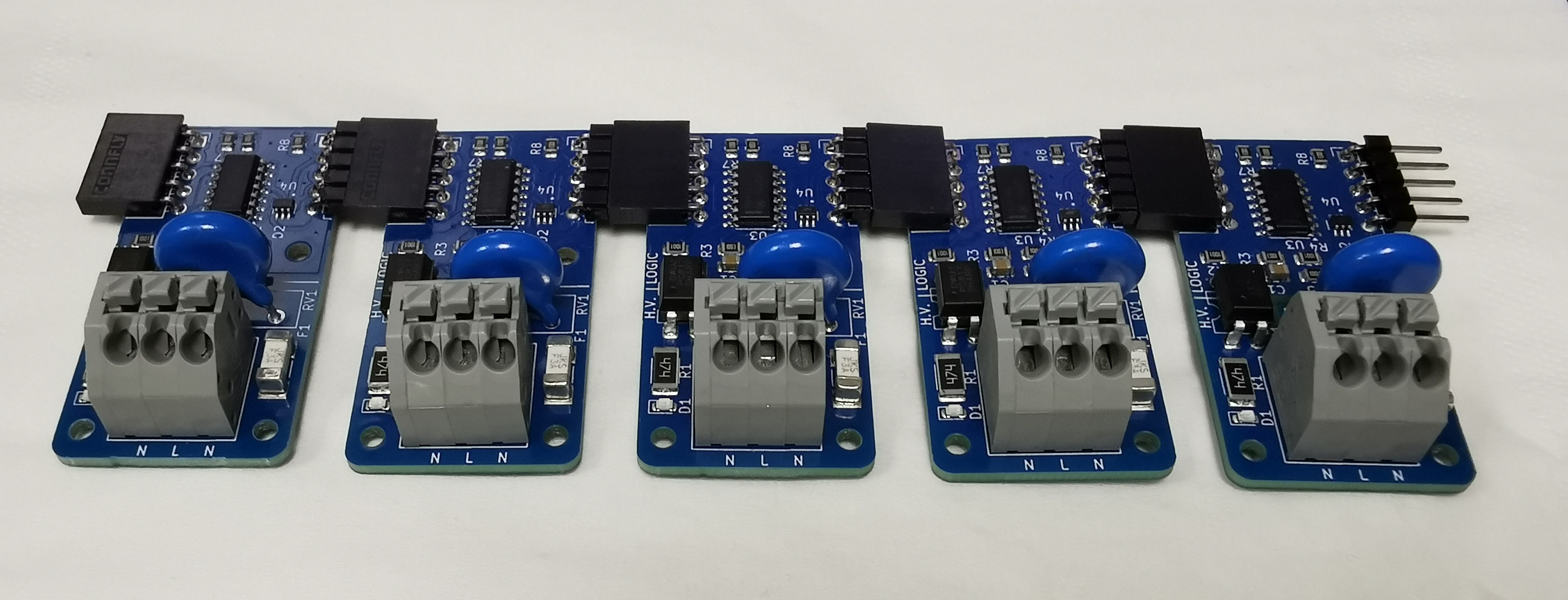
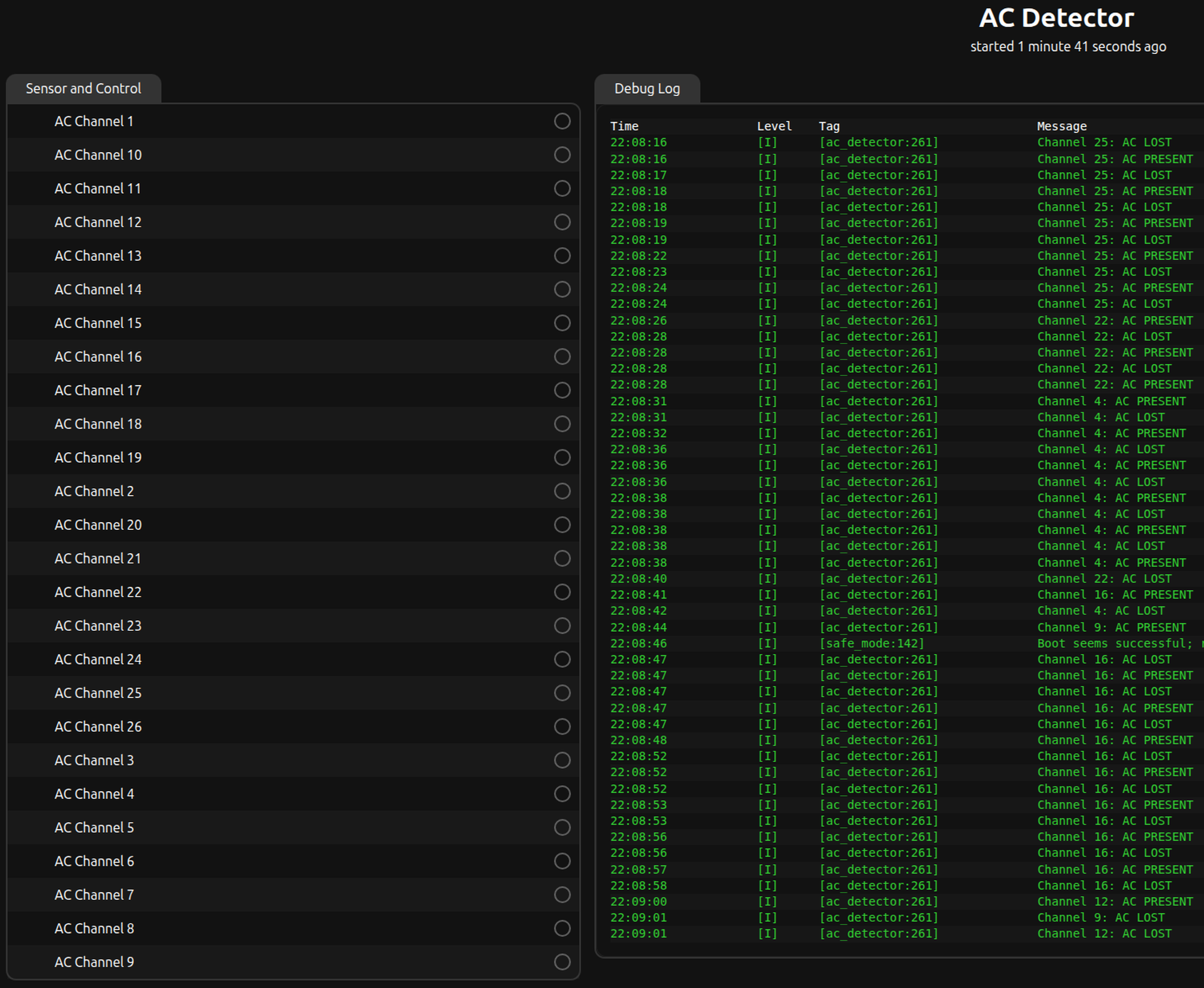
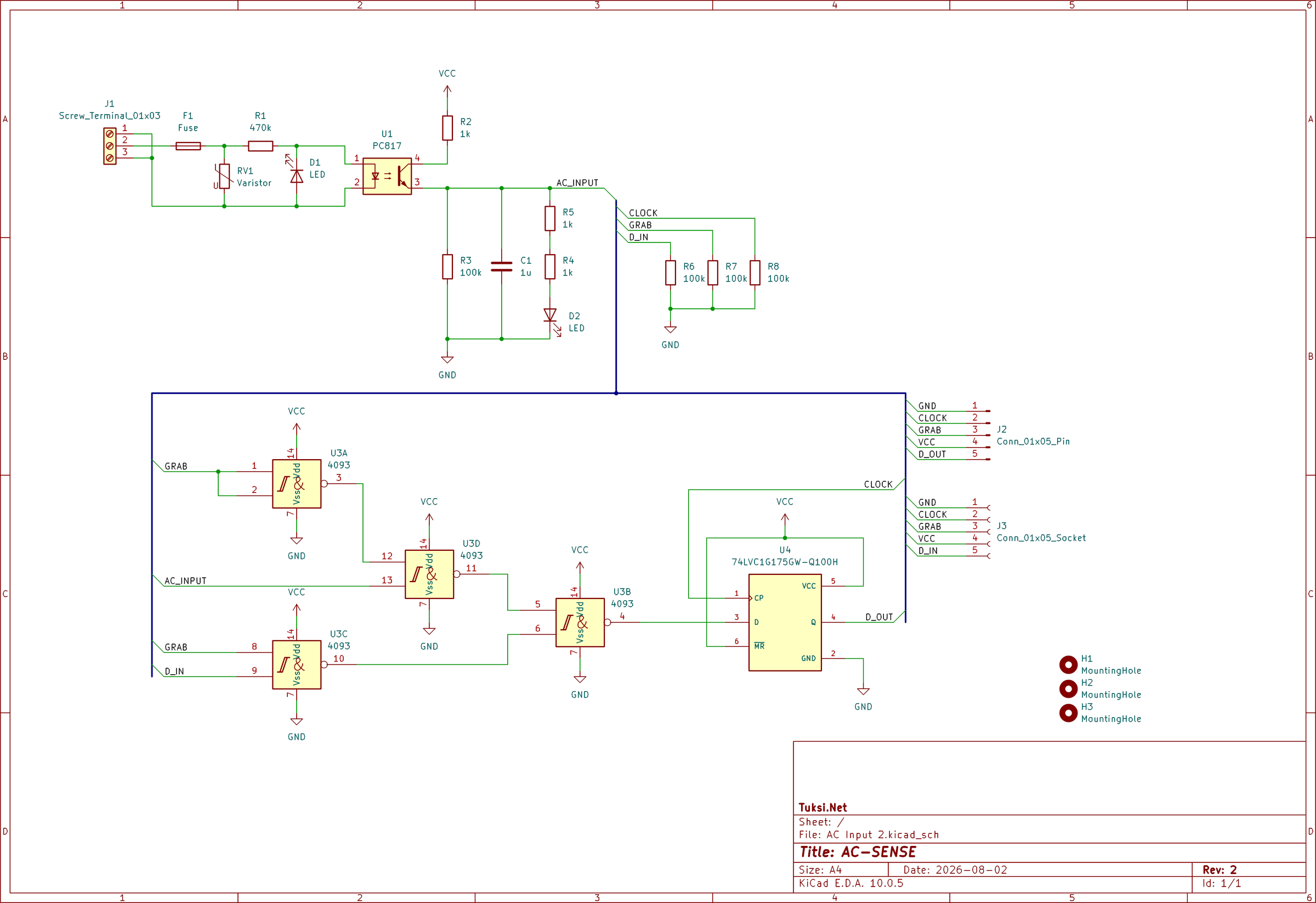
AC-SENSE as a small board that answers one simple question for your microcontroller: is AC mains present on this line, or not? It sits between the mains wiring and your logic circuit, using an optocoupler to fully isolate the two sides, then cleans up and latches the signal so your MCU just reads a stable digital HIGH or LOW. Multiple boards can be daisy-chained together, so you can monitor several circuits from a single ESP8266, ESP32, Arduino, Raspberry Pi or whatever you're already using — no extra GPIOs needed per channel. 3.3V or 5V compatible with two LED for status.
Why did I make it?
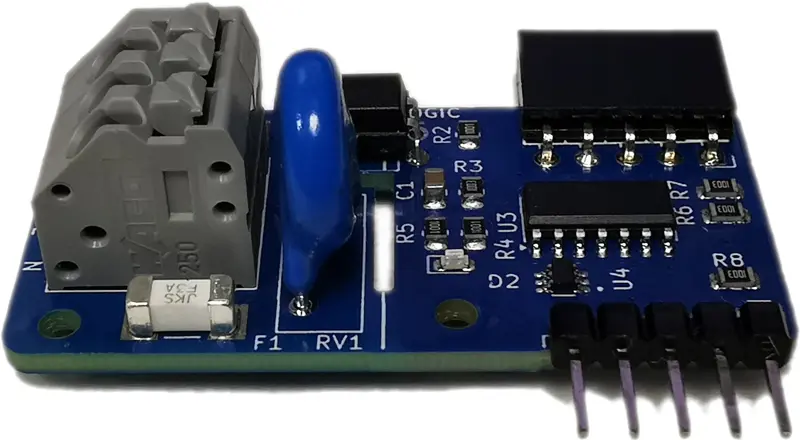
Every existing AC-detection approach I found had a real problem. Some fed AC straight into the MCU pins - which is unsafe, full stop. Others used an optocoupler but skimped on proper input protection, or only supported a single line at a time. Many also pushed AC input and digital output so close I did couldn't find it safe. I wanted something extendable: real galvanic isolation via optocoupler, proper high-voltage protection on the AC input side (fuse + varistor), and a design where any number of modules could still report back over a single shared output. I needed it to detect AC on light-switches, machine outputs for logging, sequencing, and similar automation tasks - reliably and safely, at scale.
What makes it special?
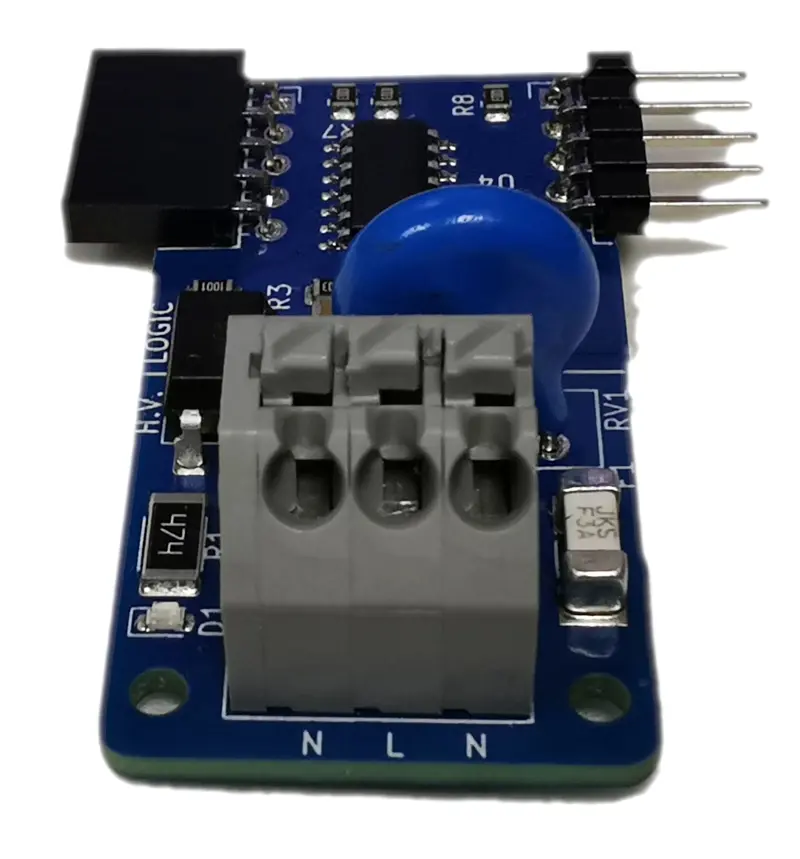
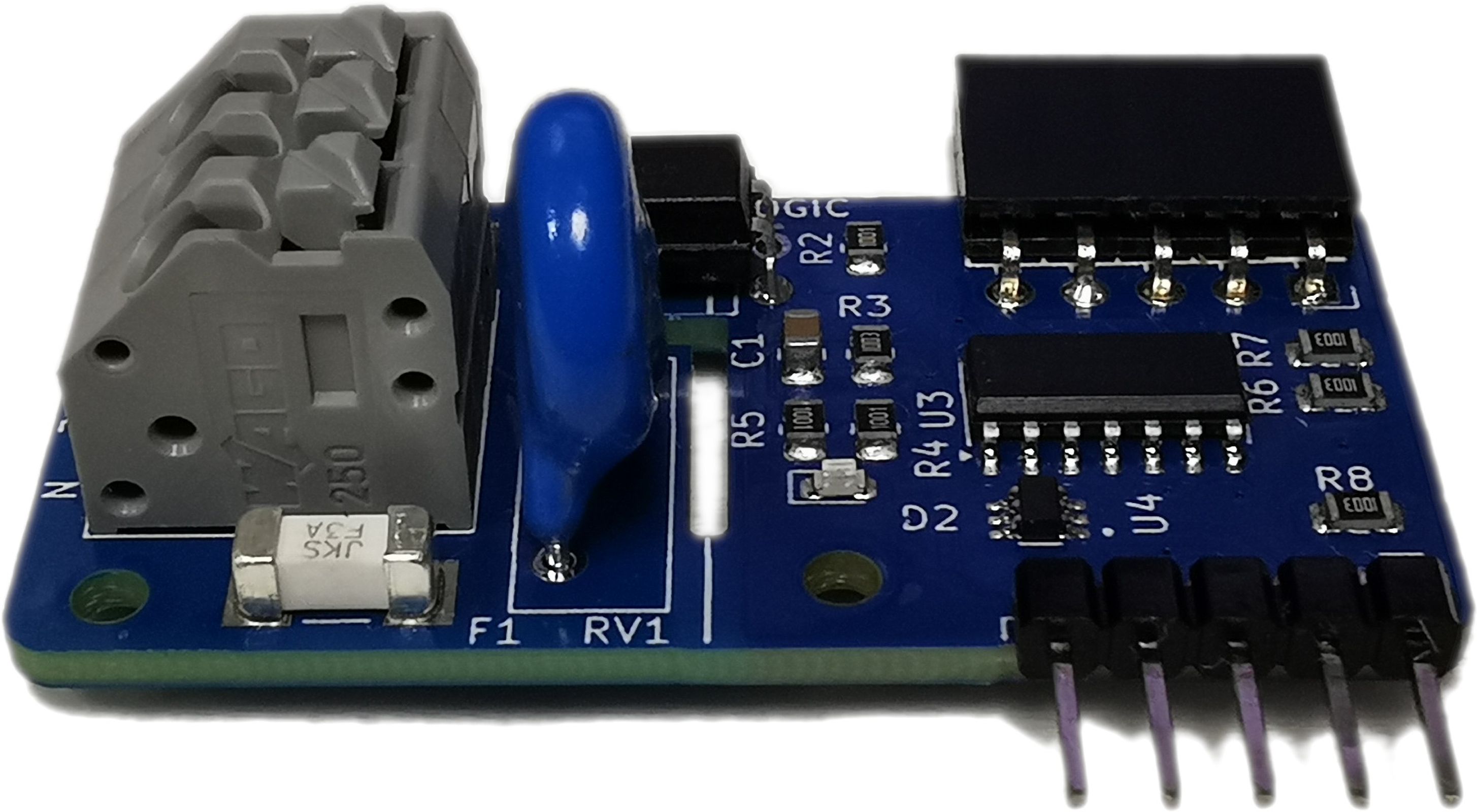
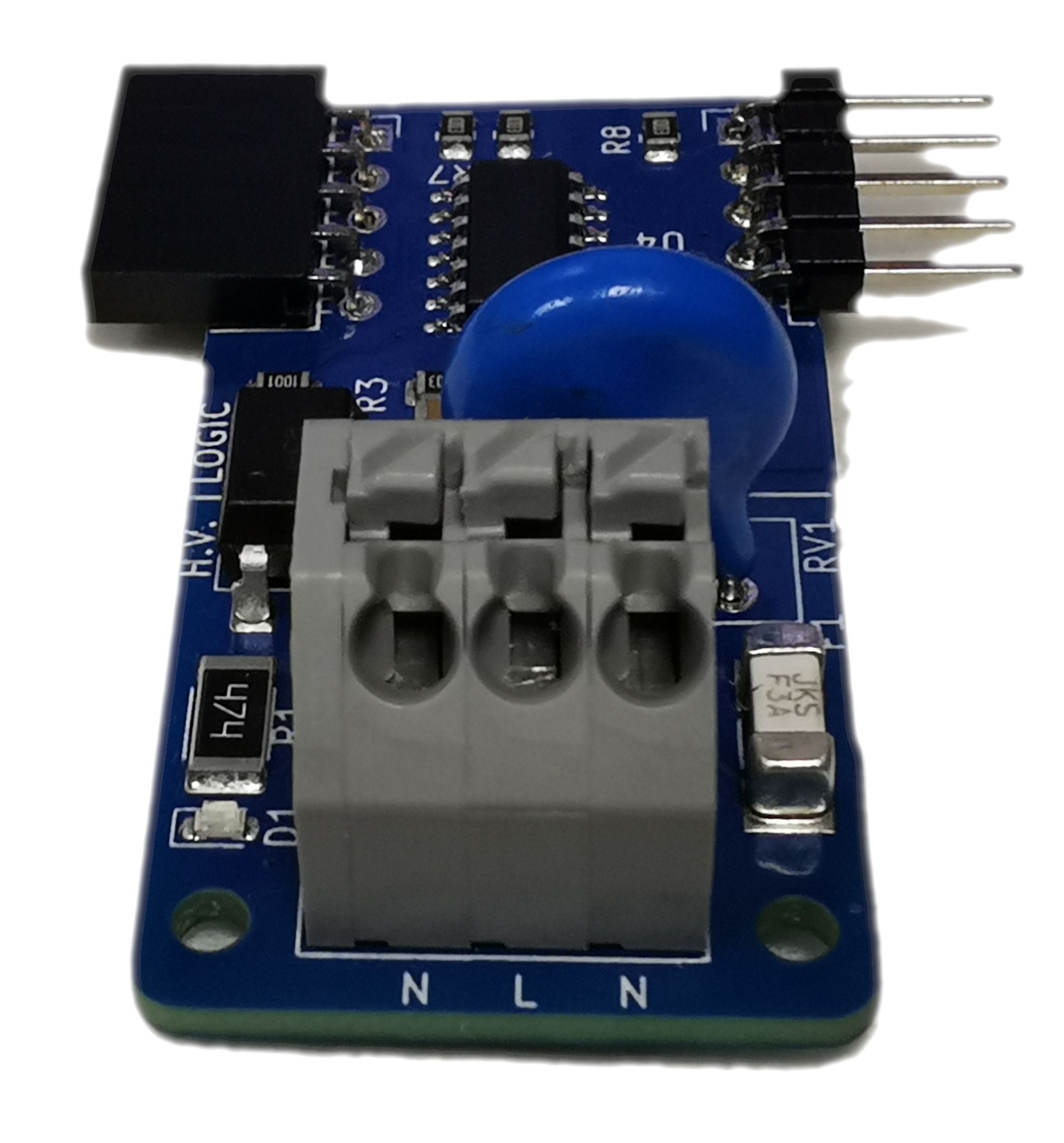
Most alternatives out there are either cheap or unsafe or both. AC-SENSE is protected from the ground up (galvanic isolation plus fuse and varistor on the input), works standalone or daisy-chained with as many modules as you need, and drops straight into ESPHome for instant Home Assistant integration if that's your stack. It's also compatible with 3.3V and 5V logic, so it fits whatever MCU you're already running. On the hardware side, the AC line connects via a WAGO push-in connector with two neutral terminals and one line terminal, which makes chaining modules together clean and fast - no extra terminal blocks or splicing needed.
Specifications
Parameter | Value |
AC input voltage | 220-240V AC, 50Hz |
AC input protection | 100mA slow-blow fuse, 250VAC + varistor |
AC line connector | WAGO push-in, 2x neutral + 1x line |
Isolation | Optocoupler-based |
Logic voltage | 3.3V or 5V |
Output interface | 3-wire: CLOCK, GRAB, DATA |
Power consumption (logic side) | ~2-3mA @ 3.3V/5V (estimated) |
Status indicators | 2x onboard LEDs |
Reference firmware | ESPHome YAML, Arduino Library |
Size | 36x44x15mm (1.42"x1.73"x0.59") with connectors included |
Reviews
No reviews yet. Reviews can be left after a verified purchase/delivery.